Measurement
Length vs Width: What Is the Difference?
Published · Updated · By Convert & Calculate Everything
Length vs width: the length is usually the longer side of an object and the width the shorter side measured across it. A room written as 12 × 10 ft is 12 feet long and 10 feet wide. Screens are the exception, written width × height, so 1920 × 1080 is 1,920 pixels wide.
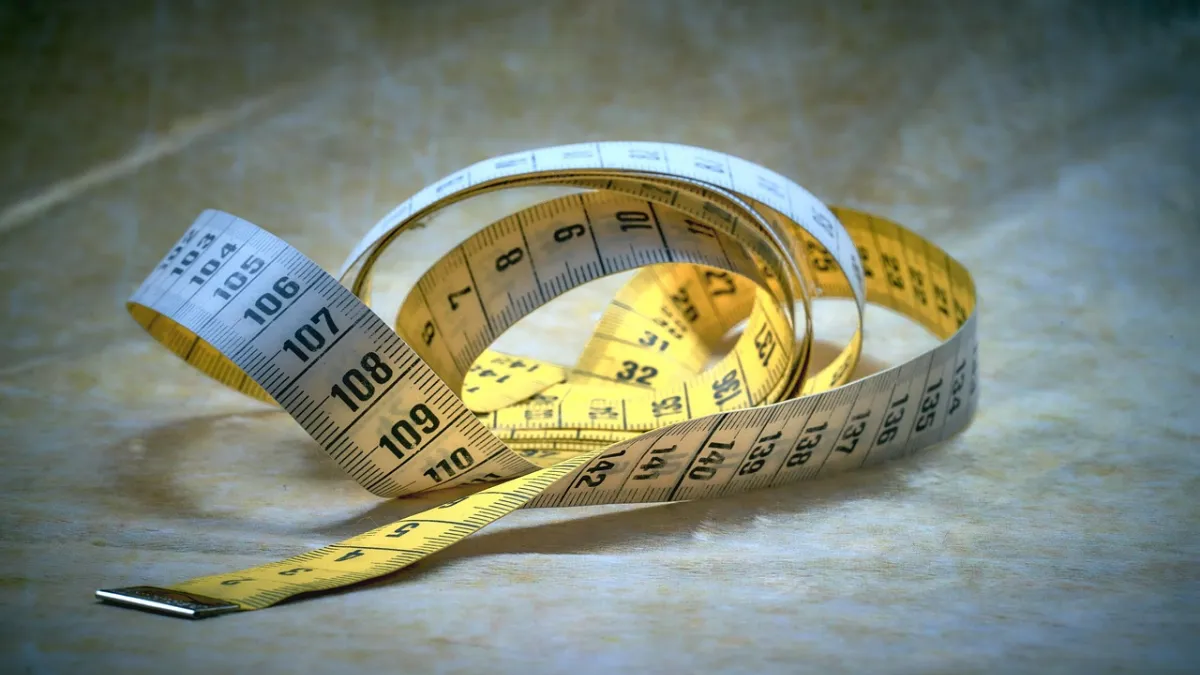
Length is usually the longest side of a flat shape or object, and width is the shorter side measured across it, at a right angle to the length. A rectangle 8 m long and 5 m wide has a length of 8 m and a width of 5 m. When you add a third dimension, the vertical one is called height (or depth, when it goes into something).
The words are conventions, not physical laws, so different fields order them differently. Room plans say length × width, screens and photos say width × height, and boxes are usually length × width × height. Whatever the names, each one is a distance you can convert with the length converter.
What is a width and a length?
Length and width are both distances. The length is normally the longer side of a flat shape or object, and the width is the shorter side measured across it, at a right angle to the length. Height is the third dimension, measured upward, for boxes and rooms.
Both are linear measurements, measured in the same units (centimeters, inches, feet, meters). The difference is direction: length runs along the main or longest direction of the object, and width runs across it. For a door, the height is the tall side and the width is the side you walk through. For a road, the length runs along the route and the width runs from one edge to the other.
Length and width by situation
| What you measure | Usual order | Example |
|---|---|---|
| Rooms and floor plans | length × width | 12 ft × 10 ft room |
| Rugs and tables | length × width | 160 cm × 230 cm rug |
| Boxes and parcels | length × width × height | 40 × 30 × 20 cm |
| Screens, photos, video | width × height | 1920 × 1080 pixels |
| Paper sizes | width × height (portrait) | A4 = 210 × 297 mm |
| Lumber | thickness × width × length | 2 × 4 in × 8 ft |
Length and width for area and perimeter
For a rectangle, area = length × width and perimeter = 2 × (length + width). A garden 15 m long and 6 m wide has an area of 90 m² and a perimeter of 42 m. Always measure both sides in the same unit first; the area converter then turns square meters into square feet or acres.
Width and length of screens and images
Digital sizes always put width first. A 1920 × 1080 image is 1,920 pixels wide and 1,080 pixels tall, an aspect ratio of 16:9. To resize without stretching, keep the ratio: the aspect ratio calculator gives the new height for any new width.
Tips to avoid mix-ups when ordering
- Check the order the seller uses: furniture sites often list width × depth × height.
- Write the unit after every number, especially when mixing inches and centimeters.
- Measure twice at the widest and longest points, and round up for fit.
CHECK YOUR OWN NUMBERS
Use the free Length Converter
Skip the manual work: the Length Converter applies the method above instantly, with a clear formula and example, and shows your result right away.
Open the Length Converter →In short
Step by step: Length vs Width
- Measure the longer side of the object: that is the length.
- Measure the shorter side across it: that is the width.
- Write them as length × width, for example 12 × 10 ft.
- For screens and images, write width × height instead.
Quick reference
km to mm
| km | mm |
|---|---|
| 0.5 km | 500,000 mm |
| 1 km | 1,000,000 mm |
| 2 km | 2,000,000 mm |
| 5 km | 5,000,000 mm |
| 10 km | 10,000,000 mm |
| 25 km | 25,000,000 mm |
| 50 km | 50,000,000 mm |
| 100 km | 100,000,000 mm |
| 250 km | 250,000,000 mm |
| 1,000 km | 1,000,000,000 mm |
Accuracy
How we checked this
We compared 4 results from this calculator with values we worked out independently, using exact decimal arithmetic and the published definitions, on October 26, 2026. 4 of 4 matched to the precision shown.
| Input | Independent value | This page | Match |
|---|---|---|---|
| 1 km → mi | 0.621371 | 0.621371 | Yes |
| 1 m → ft | 3.28084 | 3.28084 | Yes |
| 12 in → cm | 30.48 | 30.48 | Yes |
| 1 nmi → km | 1.852 | 1.852 | Yes |
From the source
The meter was once defined by a physical artifact - two marks inscribed on a platinum-iridium bar, like these from the NIST Museum.
Sources
GOOD TO KNOW
Frequently asked questions
Is length always longer than width?
Usually, by convention for rectangles and rooms. For objects with a defined front, such as doors or screens, width is the side-to-side measure even if it is longer.
Which comes first, length or width?
For rooms and rugs, length × width. For screens and images, width × height.
How do I find area from length and width?
Multiply them: area = length × width, in square units.
KEEP READING
Related guides
MORE FROM THE BLOG
All guides →